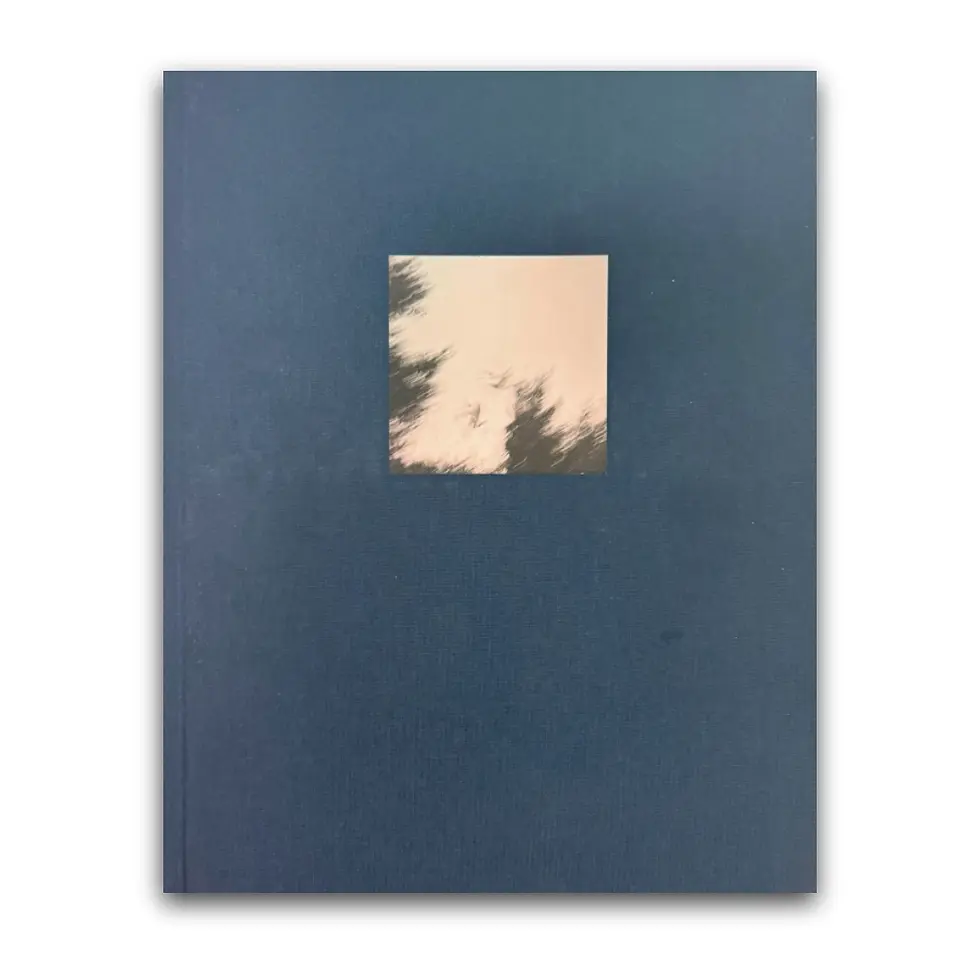
In January 1991, Keizo Kitajima began a year-long series for the Japanese magazine Asahi Graph, traveling to all fifteen republics of the Soviet Union accompanied by the journalist Kazumasa Nishioka. Kitajima, then at a turning point in his career and about to give up on snapshot photography altogether, unexpectedly found himself documenting the final months of the USSR. Only days after the final installment of the series was published in an Asahi Graph issue in December 1991, the Soviet Union officially ceased to exist.
In his photographs, Kitajima captured something essential about each place he visited, not through symbolic locations or famous figures, but by focusing on ordinary people, whose stories would otherwise never be told.
This 2025 publication of "USSR 1991" is part of an ongoing re-examination of Kitajima’s past work, following books such as "European Diary 1983-1984" and "New York (New Edition)." As part of this process, Kitajima decided to pair his USSR 1991 photographs with a series he shot between 1983 and 1984 in various Eastern European cities.
In addition to an afterword by Keizo Kitajima, "USSR 1991" also includes an essay by Shino Kuraishi.“The subjects and themes of this book are extremely diverse. Whereas the majority of Kitajima’s previous work focused on capturing, within the narrow scope of the street, the distinctive characteristics of anonymous passers-by, this series also includes subjects of cultural and historical significance: clergymen, politicians, actors, the remains of an assassinated singer, scholars, royal family members, and so on. Kitajima presents them side by side, in complete equality, with ordinary people of various professions and affiliations […]
One of the enduring threads of Kitajima’s long-term observations is the sustained focus on the individuality of people from diverse ethnic backgrounds. An example is the recurring attention to people of Korean descent living across the Soviet Union: a portrait of a girl in Yuzhno-Sakhalinsk (formerly Toyohara) in front of a house from the Japanese colonial period; a university professor; a journalist; a Korean family living in Alma-Ata (now Almaty) in Kazakhstan. The portrait of the girl, in particular, conveys the resilience of people who, torn from their roots and compelled to settle in a distant land, endured by making it a new home. Despite the vast distances between Siberia and Central Asia, the places and portraits in the book also record the memory of Japan’s twofold guilt toward the Korean people: first through colonial rule, and then postwar neglect.”
― from Shino Kuraishi’s essay “Scattered Individuals and Differences”