

Ed Templeton: Photographing on a Skateboard

Ed Templeton is one of those figures whose career is difficult to contain within a single discipline. Photographer, draughtsman, painter, professional skateboarder and founder of Toy Machine, Templeton has developed since the late 1980s a body of work deeply connected to urban culture, adolescence and everyday life. Although his name is inevitably associated with skateboarding, reducing his work to that world would overlook a much broader, autobiographical and complex artistic practice.
Born in 1972 in Orange County, California, Templeton began skateboarding as a teenager and soon entered the professional circuit. In 1993 he founded Toy Machine, a brand that would become one of the most influential names in independent skateboarding. His involvement in this world allowed him to travel constantly and encounter a community of skaters, musicians, artists and young people connected to different alternative scenes. During these journeys, he began using a camera as a natural extension of his experience. Photography was not a separate activity for him, but another way of recording what he was living through.
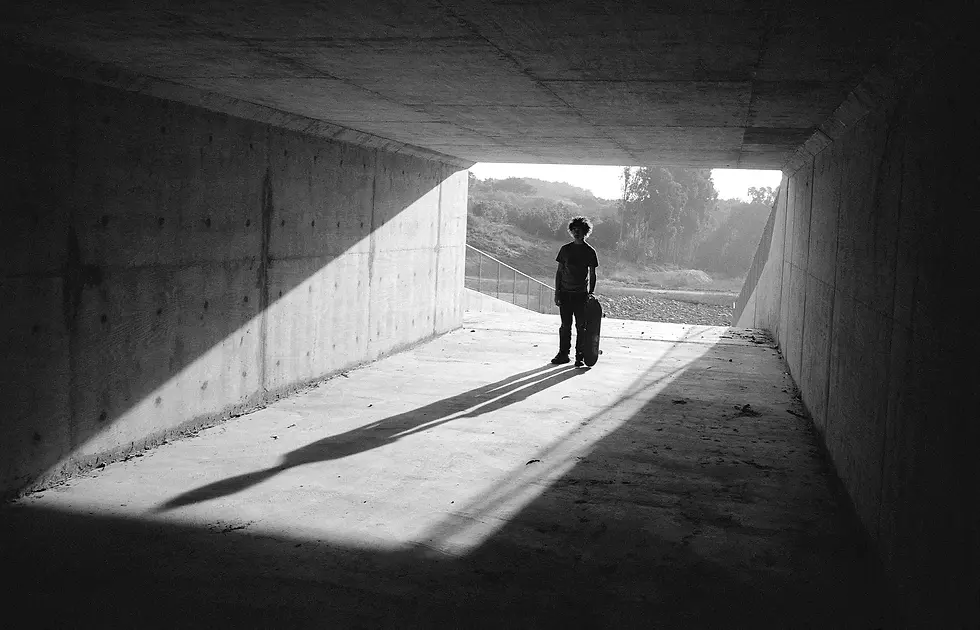
From the beginning, his position was different from that of a photographer observing a subculture from the outside. Templeton was completely immersed in it. He shared the same spaces, travelled with the same groups and personally knew many of the people who appeared in his photographs. This proximity explains much of the intimacy of his work and his particular way of approaching his subjects. His images rarely feel constructed from the detached position of conventional documentary photography. Instead, they convey the sensation of witnessing fragments of a life that continues to unfold in front of the camera.
One of Templeton’s central subjects is adolescence. For decades, he has photographed young people at a stage of life defined by experimentation, insecurity, rebellion and the search for identity. His photographs depict people who are still trying to work out who they want to become and how they want to present themselves to others. Poses, gestures of defiance, boredom, first sexual experiences, friendships, parties and apparently insignificant situations acquire a much deeper meaning when viewed from the perspective of time.
In Teenage Smokers, for instance, he focuses on young people smoking. The gesture might appear trivial, but in his photographs it becomes a way of observing the construction of a particular adolescent identity.

The subject is not really smoking itself, but attitude, posing and the desire to project an image of independence. Something similar occurs in Teenage Kissers, where kissing becomes a starting point for exploring intimacy, desire and relationships between young people.
Templeton does not need major events to construct his photographs. His interest lies precisely in what normally remains outside official narratives. A person sitting in a room, a group of friends in the street, someone looking into the camera, a party, a couple, a tattooed body or a scene encountered while travelling can all become photographic material. The everyday gains significance because it forms part of an accumulated experience: a life observed over several decades.

This relationship with time is particularly important in Deformer, one of his most personal projects. The book brings together photographs, drawings, paintings, documents and different materials produced over many years. The result functions almost like a fragmented autobiography in which Orange County, family, adolescence, sexuality, religion, skateboarding and the artist’s own development become intertwined.
The place where Templeton grew up remains a constant presence throughout his work. Orange County is often associated with an idealised image of Southern California, defined by beaches, sunshine, surfing and an apparent sense of freedom. Templeton presents a much more contradictory reality. His photographs also speak of suburban boredom, social pressure, the need to belong, violence, sexuality and the tensions that can exist behind an apparently perfect environment.
His work can therefore also be understood as an exploration of the American suburban experience. He does not attempt to produce an objective sociological portrait, but rather to reconstruct a place through the memories and experiences of someone who lived there. The external landscape and the psychological landscape gradually become intertwined. Streets, houses, shopping centres, vacant lots and bedrooms become settings for personal development.

One of Templeton’s most compelling characteristics is that he photographs from within the world he knows. His camera does not seek a neutral distance. There is an obvious emotional involvement and, in many cases, a sense of complicity with the people he photographs. Even when the images are uncomfortable, provocative or seemingly vulgar, they often contain an emotional dimension. Templeton does not appear interested in turning his subjects into representatives of a particular subculture, but rather in showing individuals within specific moments of their lives.
Formally, his photography retains a spontaneous appearance that has become one of its defining characteristics. Direct flash, intense colours, imperfect framing, close-ups, unexpected perspectives and quickly captured images create a strong sense of immediacy. Yet this spontaneity does not mean a lack of intention. Templeton has an exceptional ability to recognise when an apparently ordinary situation contains something visually strange, funny or emotionally charged.
His photographic language is connected to many traditions within American photography, but also to punk, comics, fanzines, graffiti, graphic design and DIY culture. This combination is essential to understanding his work. In his books, photography does not necessarily stand alone, but interacts with drawings, texts, documents and other elements that expand the narrative.
Drawing occupies a fundamental place in his practice as well. Templeton has been drawing since he was very young and has never regarded it as secondary to photography. His drawings share with his photographs an interest in characters, bodies, friends, skaters and the people who make up his surroundings. Some are quick and humorous observations, while others take on a much more intimate and autobiographical quality.
This combination of disciplines is also present in his work for Toy Machine. Templeton developed much of the brand’s visual identity and created imagery that became instantly recognisable within skate culture. His designs helped introduce a darker, more provocative and artistic aesthetic into a world where the graphics of skateboards, clothing and videos played an enormous role.
During the 1990s and early 2000s, Templeton also became associated with a generation of artists working on the margins of cultural institutions and sharing connections with skateboarding, surfing, music, graffiti and street art. This environment would later be associated with the Beautiful Losers exhibition and film, where his work appeared alongside that of other artists from the same scene.
As time has passed, Templeton’s photography has taken on an increasingly autobiographical dimension. What initially appeared to be spontaneous documentation of friends and travelling companions has become a personal archive spanning several decades. Different generations of young people appear alongside places that have changed, relationships that have ended and people who have grown older. Photography consequently becomes a form of memory.
This aspect is particularly evident in Wayward Cognitions, a project built from an archive accumulated over many years. Rather than following a single story, the photographs establish free associations between different moments and situations. The structure is not necessarily chronological or narrative. It resembles the way memory operates, with one image leading to another through a purely emotional or visual connection.
Wires Crossed takes this relationship with skateboarding into a broader perspective. The project brings together photographs made over roughly two decades and allows the evolution of a scene to be seen from within. Travel, competitions, hotel rooms, streets, parties, injuries, friendships and moments of rest all appear. Skateboarding emerges as a complete way of life, with its energy and freedom, but also with the physical and emotional toll it can involve.
One of Templeton’s great strengths is precisely that he does not create a completely idealised image of youth. His photographs can be funny and melancholic, tender and aggressive, absurd and deeply personal. Youth appears as a contradictory period in which freedom exists alongside insecurity and the need to find a place of one’s own.
His artistic relationship with Deanna Templeton is also significant. Both have developed work connected to suburban life, youth, identity and the environment of Orange County. In their collaborative projects, their differing perspectives create a dialogue around the same territory and reveal how two photographers who share a life and a context can nevertheless develop very different ways of seeing.
Over the years, Templeton’s work has moved beyond being understood simply as photography connected to skateboarding. Skateboarding was his entry point into photography and remains an essential part of his universe, but his work addresses much broader questions: growing up, belonging to a community, constructing an identity, remembering, ageing and watching places and people change.
Perhaps the most interesting aspect of his career is precisely this continuity. For decades, Templeton has kept a camera directed towards his own life and the people around him. Rather than constantly searching for new subjects, he has returned to the same territories and explored them until they became increasingly complex. Adolescence, California, skateboarding, friendship, sex, family and alternative culture recur throughout his work, but every return also changes the meaning of the images that came before.
His work ultimately functions as a vast personal and generational archive. What began as photographs made by a skateboarder during his travels has developed into a visual chronicle of several decades of American culture. Perhaps this is where Ed Templeton’s real significance lies: in his ability to transform everyday experience, personal relationships and his surroundings into a recognisable artistic language, while preserving the feeling that the camera was not there to explain the world, but to be part of it.



Comments